I love granola!!! Maybe it's the hippiness that has been instilled in me or maybe it's just the taste and the fact that it's good for me, I don't know...but it is a staple in my diet! My family and I eat granola a LOT...whether it be as cereal, as a snack, as a topping on our favorite yogurt or just mixed in with some fresh fruit...we consume large quantities! It's also a great snack for parents and children alike who are on the go and need something quick and easy to eat! I have found a great recipe that is fairly easy to make and tastes really good and allows me to have control of what goes in the granola that we eat!
Ingredients:
raw oats
ground flaxseed
ground wheat bran
(I also use ground hemp seed, but it is optional)
raw seeds (pumpkin, sunflower, sesame...whatever you have on hand)
slivered or sliced almonds, pecans or walnuts (this is optional and your choice as to which you want)
1/2 cup canola oil (this is what the recipe calls for, but I opt to use safflower oil)
1/2 cup peanut butter
splash of water
1/4 cup honey
1 tablespoon cinnamon
dried fruit (your choice....cherries, raisins, figs, blueberries, cranberries, etc.)
Directions:
Preheat oven to 325.
Spread raw oats onto one or two baking sheets/roasting pans. I don't measure the amount that I use...just use enough to cover the bottom of the pan. Then add plenty of flax seed, wheat bran, seeds and nuts. (again, I don't measure these things, so I just add a generous portion of each...a little more of the thing I like...or just use what I have of any of these things)
Then mix together the oil, peanut butter, water, honey and cinnamon in a glass measure cup/bowl and microwave for approximately 1 minute...just to melt the honey and peanut butter a litte to make for an easier way to mix.
Then stir the mixture into the dry ingredient on the baking sheet.
Bake at 325 for 20-30 minutes or so, stirring once or twice.
Remove when toasted to a light brown.
When the granola is cooled, add the dried fruit.
*Note, I make a large quantity of this when I do make it and just divide it up into freezer bags for easy storage and and easy way to just grab on the go. If you do freeze any, be sure that it is cooled completely before bagging it for the freezer.
Wednesday, November 3, 2010
Monday, November 1, 2010
Homemade Dish Soap
For those of you who enjoy saving money or like to make your own safe products for your home, you will love this!! Now, not only can you make your own homemade laundry detergent, but you can now make your own dish soaps too!!! For just fractions of the cost of buying store soaps and a few easy ingredients, you can make your own dish soap that is safe for your family and safe for the environment!! I have a couple different recipes, depending on how you prefer to wash your dishes. One is for washing dishes by hand in the sink and the other is for a dishwasher.
This first recipe is for a liquid soap that can be used for washing dishes in the sink by hand.
Ingredients:
1 cup liquid Castile soap
3 tablespoons water
scented oil of your choice (or you can buy a scented Castile soap, or even use lemon juice for an easy scent)
Combine the ingredients in a container of your choice...easy as that!!! (I've seen it put in glass bottles with a metal spout for a fancier look, but I just pour it into an old dish soap container so I can re-use at the same time!!)
*Note- For those of you who aren't familiar with the liquid Castile soap, it can be found in some grocery stores and in most health food stores. I have also found it online at Target, which also sells all kinds of the scented ones too and it's pretty convenient to buy it that way also.
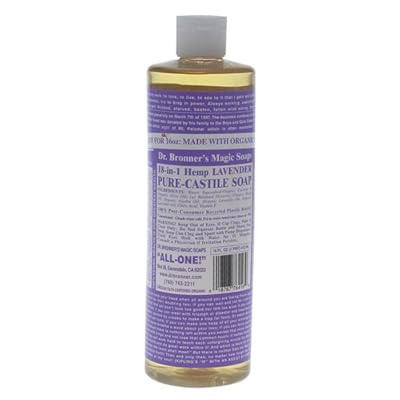
Here is a picture of the one I like to get which is lavender scented...it costs approximately $9 for this 32 oz. bottle, but if you do the math, you can get 4 cups out of just this bottle, which means you can make the soap 4 times with just one bottle..at an average cost of just $2.25 per mixture. And if you have ever bought organic dish soap from a store before, you will know that it costs much more than $2.25!!!

This first recipe is for a liquid soap that can be used for washing dishes in the sink by hand.
Ingredients:
1 cup liquid Castile soap
3 tablespoons water
scented oil of your choice (or you can buy a scented Castile soap, or even use lemon juice for an easy scent)
Combine the ingredients in a container of your choice...easy as that!!! (I've seen it put in glass bottles with a metal spout for a fancier look, but I just pour it into an old dish soap container so I can re-use at the same time!!)
*Note- For those of you who aren't familiar with the liquid Castile soap, it can be found in some grocery stores and in most health food stores. I have also found it online at Target, which also sells all kinds of the scented ones too and it's pretty convenient to buy it that way also.
This next recipe is for a dishwasher soap. (FYI..if you already make your own laundry soap, this is a great recipe because it uses the same ingredients!)
Ingredients:
(the amount of the ingredients really depends on how much you want to make)
1 part 20 Mule Team borax
1 part Arm & Hammer washing soda
Mix the borax and washing soda together in a bowl...be sure to break up any clumps. Transfer into an air-tight container of your choice. (I just use a glass canning jar, as shown)
And there you have it...two easy ways to make soaps for washing your dishes that are safe and free of lots of chemicals and also eco-friendly...at a fraction of the cost of regular dish soaps!
Thursday, October 14, 2010
Finding Safe Products
Now that I've scared you (or hopefully at least made you aware of the dangers) with the videos about the chemicals in cosmetics and personal care products, I'm going to share a very useful resource to use for researching all of these chemicals and find out what's safe and what isn't and find manufactures who do produce safe products. The website is http://www.safecosmetics.org/. It's full of information that is necessary for any consumer wanting to buy safe products for their families. Check it out!
Need Green Tips at Home?
If you're looking for a great resource with lots of information on green living....check out the book "It's Easy Being Green" by Crissy Trask. Not only does it give you tons of tips for things you can do at home, at work or on the go for being eco-friendly, but it also gives lots of facts and information on how living green can impact the environment in a great way, it gives suggestions on how to go about getting involved in small ways to make an impact on the Earth conscious movement and it also gives lots of different resources (including stores, websites and organizations) who promote being green or who offer green alternatives to regular services.
Monday, October 11, 2010
"Organic" Doesn't Always Mean Organic
So "Organic" doesn't always mean organic...sounds confusing right?
If you've read my previous post, you'll know that I'm all for eating organic foods. However, one of the most important things I've discovered about organic foods, is that just because the label says "organic" doesn't mean that it is, in fact, organic. Food labeling has very few regulations, so some manufacturers can actually claim that their product is "organic" or "all natural" or whatever when it isn't. So I suggest looking into what the labels mean when buying organic foods and to know what the regulations are that need to be met to call something "organic", to ensure that you are getting what you pay for. Here are a couple of websites that I have found useful:
fnic.nal.usda.gov/nal_display/index.php?info_center=4&...
www.ams.usda.gov/AMSv1.0/getfile?dDocName=STELDEV3004446&...
www.thedailygreen.com/healthy-eating/Food-Label-Decoder...
www.faqs.org/nutrition/Ome-Pop/Organic-Foods.html
In addition to knowing what the labels mean, and what the regulations are in calling something "organic", I also suggest that you should buy locally and from people you know or grow your own whenever possible. Because buying foods in the store that are organic and do meet the criteria for being organic, doesn't mean that they are grown free from pesticides and other harmful chemicals. See this link for some of the unknown facts about "organic" foods: http://www.biotech-info.net/deadly . I think it's important to know as much as we can about the foods we consume. And sometimes things aren't always what they seem...even when they claim to be the best for us!
All in all, the best thing you can do is to grow your own...because only then do you truly know what it happening to your foods! But if you can't, at least do the necessary research to ensure that you are getting the best food possible.
If you've read my previous post, you'll know that I'm all for eating organic foods. However, one of the most important things I've discovered about organic foods, is that just because the label says "organic" doesn't mean that it is, in fact, organic. Food labeling has very few regulations, so some manufacturers can actually claim that their product is "organic" or "all natural" or whatever when it isn't. So I suggest looking into what the labels mean when buying organic foods and to know what the regulations are that need to be met to call something "organic", to ensure that you are getting what you pay for. Here are a couple of websites that I have found useful:
fnic.nal.usda.gov/nal_display/index.php?info_center=4&...
www.ams.usda.gov/AMSv1.0/getfile?dDocName=STELDEV3004446&...
www.thedailygreen.com/healthy-eating/Food-Label-Decoder...
www.faqs.org/nutrition/Ome-Pop/Organic-Foods.html
In addition to knowing what the labels mean, and what the regulations are in calling something "organic", I also suggest that you should buy locally and from people you know or grow your own whenever possible. Because buying foods in the store that are organic and do meet the criteria for being organic, doesn't mean that they are grown free from pesticides and other harmful chemicals. See this link for some of the unknown facts about "organic" foods: http://www.biotech-info.net/deadly . I think it's important to know as much as we can about the foods we consume. And sometimes things aren't always what they seem...even when they claim to be the best for us!
All in all, the best thing you can do is to grow your own...because only then do you truly know what it happening to your foods! But if you can't, at least do the necessary research to ensure that you are getting the best food possible.
Subscribe to:
Posts (Atom)
